Sovereign AI Is the Next Frontier and Why Control of Your Digital Assets Matters

Wars, geopolitical tensions, and rapid AI adoption have turned data sovereignty from a niche concern into a business imperative.
Gartner predicts that by 2027, 70% of enterprises adopting GenAI will rank sustainability and digital sovereignty among their top criteria when choosing a public cloud GenAI service.
Sovereign AI means running AI on your own terms. Your data, your models, and the servers they run on all stay under your country's laws and your organization's control. No foreign company or government can access them.
The question is no longer if you need sovereign AI. The question is how quickly you can implement it.
What Is an Air-Gapped DAM?
An air-gapped DAM runs on a network with no connection to the public internet. Files, AI models, and search all stay inside your building or national data center. It's the highest level of control, used by defense, intelligence, and national broadcasters. ioMoVo runs a fully air-gapped deployment for a government agency managing 250TB+ of media, with AI tagging and transcription running on local models." Link the sovereign/air-gapped page.
Data Sovereignty vs Data Residency vs Digital Sovereignty
Data residency, data sovereignty, and digital sovereignty are different concepts that organizations often confuse.
This distinction matters because storing data locally does not guarantee sovereignty if foreign laws can still compel access. Digital sovereignty extends control to infrastructure, operations, and the entire technology stack.
According to the Linux Foundation's sovereign AI research, 72% of organizations prioritize data control, and 69% cite national security as key drivers. These are not abstract concerns because they reflect real vulnerabilities that recent global events have exposed.
Europe leads the regulatory push with GDPR, the NIS2 Directive, and substantial investments in sovereign cloud infrastructure. The EU AI Act and AI Continent Action Plan emphasize human-centric AI built on European infrastructure.
The GCC and the Middle East follow a similar trajectory. Nearly 60% of firms in the region report rapid AI adoption, and 90% of CEOs actively use generative AI. Abu Dhabi aims for 100% sovereign cloud adoption as part of its digital transformation strategy.
The trend is clear across markets. 84% of organizations consider digital sovereignty in their AI strategies, though only 34% treat it as a top priority today. That gap represents both risk and opportunity.
Platforms that ensure security and regulatory compliance become essential in this environment. Organizations need robust controls like access management, encryption, and disaster recovery to meet sovereignty requirements.
Why Control of AI and Digital Assets Is a Competitive Advantage
Controlling where and how your data and models operate reduces exposure to foreign jurisdiction laws. The US CLOUD Act, for example, can compel US-based cloud providers to hand over data regardless of where it is stored.
Most Middle Eastern tech leaders rank data protection as a top investment priority, yet many organizations remain unprepared for cloud-related threats. This gap creates vulnerabilities that competitors and adversaries can exploit.
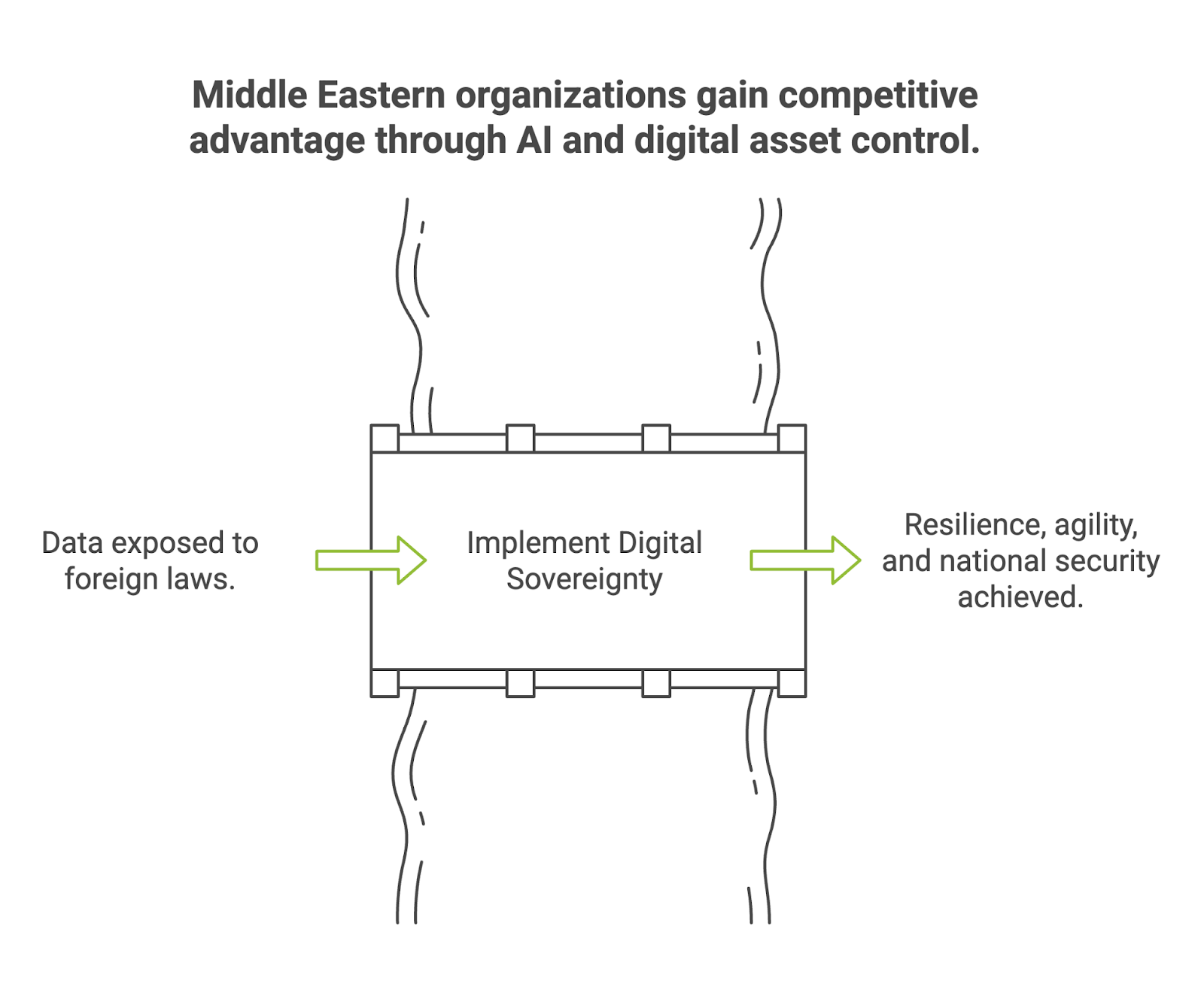
Local control also improves AI performance. Training and inference run faster when data stays close to the compute resources. Better data quality and lower latency translate directly to better business outcomes.
The three pillars of digital sovereignty provide a framework for building true independence:
- Technical Control: Own or control the infrastructure, hardware, and software stack your AI runs on
- Data Control: Maintain full authority over where data is stored, how it moves, and who accesses it
- Operational Independence: Reduce reliance on foreign vendors and build resilience against supply chain disruptions
Organizations that master all three build resilience against supply chain disruptions and vendor lock-in.
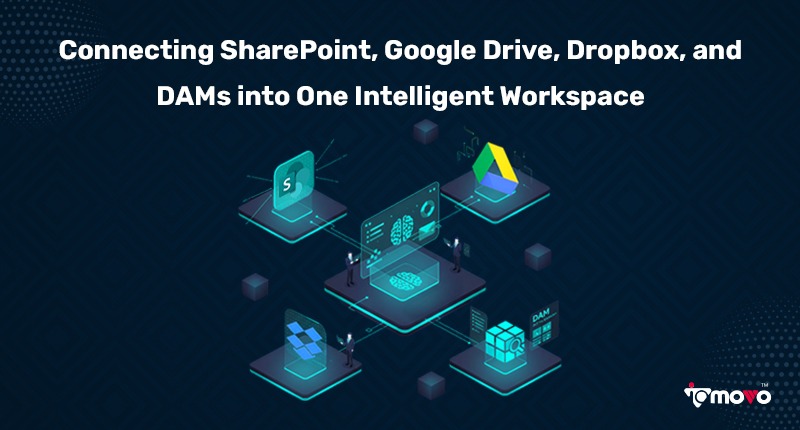
Managing digital assets effectively requires platforms that handle encryption, access controls, and multi-cloud integration. Digital asset management solutions with AI-powered tagging and workflow automation help organizations maintain sovereignty while staying agile.
National security considerations extend beyond defense applications. Protecting citizens' data, preventing AI weaponization, and maintaining cultural autonomy matter to governments worldwide. Public agencies need secure DAM systems that support FOIA and PRA compliance while managing sensitive information across sovereign environments.
Real World Sovereign AI Deployments
Saudi Arabia's draft Global AI Hub Law proposes private, extended, and virtual AI hubs that operate as data embassies. These zones function under foreign law while residing within Saudi jurisdiction, enabling cross-border collaboration without sacrificing sovereignty.
Zoom deployed AI workloads on Oracle Cloud Infrastructure in Riyadh and Jeddah to meet Saudi data residency requirements. This case study demonstrates how global companies adapt their infrastructure to serve sovereign markets.
Abu Dhabi's push toward 100% sovereign cloud adoption reflects the scale of GCC investment in AI infrastructure. These are not pilot projects. They represent fundamental shifts in how nations build technological independence.
Europe shows similar patterns. Regulated industries deploy sovereign cloud solutions to comply with GDPR and NIS2, emphasizing local hosting and end-to-end encryption.
Implementing sovereign AI requires aligning legal, technical, and operational controls. Costs do not necessarily exceed public cloud options. Some providers claim cost parity. Trade-offs exist in scalability and vendor diversity, but the sovereignty benefits outweigh these limitations for many organizations.
Compliance, Trust, and National Security
Regulatory frameworks now cover data residency, user consent, auditing, bias mitigation, and algorithm transparency. The compliance landscape spans multiple regions and requirements:
- Europe: GDPR for data protection, NIS2 Directive for cybersecurity, EU AI Act for algorithm transparency and bias mitigation
- GCC Region: National data protection laws, Saudi Global AI Hub Law for cross-border AI collaboration
- Global Considerations: US CLOUD Act implications, industry-specific regulations like HIPAA, FOIA, and PRA requirements for public agencies
Big tech sovereign clouds may not fully protect against extraterritorial laws. The US CLOUD Act remains a concern even when data resides overseas. True sovereignty requires more than geographic separation.
Cybersecurity and resilience tie directly to sovereignty. 55% of Middle Eastern organizations prioritize digital and technology risk mitigation. Over 60% cite cyber threats as a top business risk.
Open source plays a critical role in sovereign AI. 90% of organizations consider open source essential for transparency, and 69% value auditability. Open models like Mistral and LLaMA enable customization without vendor dependence.
Organizations need platforms with proven compliance records. SOC 2 Type II certification demonstrates that a provider maintains controls for access management, vulnerability management, and disaster recovery. Compliance with GDPR, HIPAA, and other frameworks, combined with advanced encryption and audit trails, builds the trust sovereign AI requires.
AI-driven automation reduces manual effort in governance and ensures consistent metadata management. This automation becomes essential as organizations scale their sovereign AI deployments.
Market Forces Driving Sovereign AI Adoption
The market opportunity for sovereign AI is substantial and growing rapidly:
- GCC Market Growth: The Generative AI market will exceed USD 23 billion by 2030, representing roughly 2% of regional GDP.
- Adoption Gap: Only 14 to 28% of Middle Eastern firms have scaled AI, while more than 70% of executives believe transformation is necessary.
- Consumer Demand: 37% of consumers prioritize data localization, which forces organizations to adapt or lose competitive advantage.
- Investment Momentum: National AI strategies in Saudi Arabia, UAE, and Qatar pour billions into infrastructure and local startups.
International collaboration remains essential. 94% of organizations believe global cooperation drives sovereign AI forward. Open source and open standards enable this collaboration without compromising independence.
Solutions that integrate multiple cloud providers help organizations manage assets efficiently. Unified platforms with automated workflows and AI assistants simplify multi-cloud management while maintaining sovereignty.
Taking Control of Your Digital Future
Sovereign AI represents the convergence of geopolitical reality, regulatory requirements, and market demand. Organizations that control their data and AI models today will define competitive advantage tomorrow.
The technology exists. The regulatory frameworks are emerging. The market momentum is building.
Government tech leaders, sovereign fund executives, and investors face a choice. Adapt proactively or react to mandates later. The first approach builds strategic advantage. The second merely avoids penalties.
Digital sovereignty requires platforms that combine security, compliance, and operational flexibility. Multi-cloud integration, AI-driven workflows, and robust access controls form the foundation. Organizations need partners who understand both the technical requirements and the strategic implications.
The next frontier of AI is sovereign. The question is when you will get there.
Fill Out the Form Below to Get Started!
Transform How Your Organization Manages Content
Unlock hidden value in your content with AI — faster discovery, better workflows, and organized collaboration
Ready to see how ioMoVo can fit your team?