There isn't a single best DAM platform for every team. The right choice depends on whether you're optimizing for AI-native search without migration (ioMoVo), brand portals (Bynder, Brandfolder), enterprise MRM (Aprimo), Adobe ecosystem depth (AEM Assets), developer-first media delivery (Cloudinary), Microsoft integration (MediaValet), or budget (ResourceSpace, Canto).
.svg)
Resources /
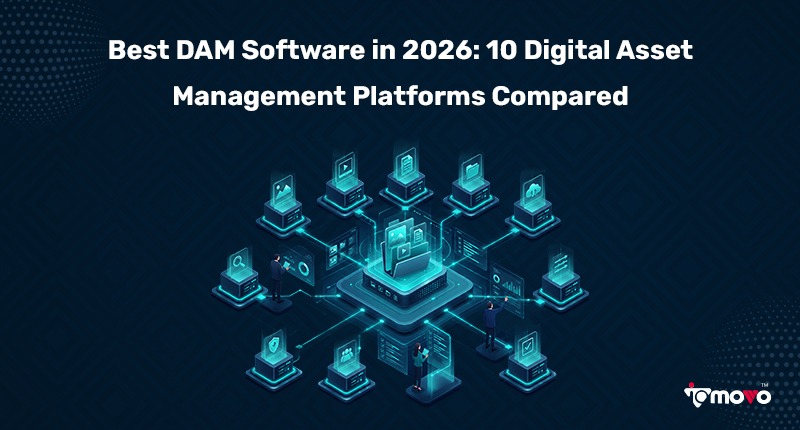
BlogBest DAM Software in 2026: 10 Digital Asset Management Platforms Compared

Author
Jay HajeerChoosing digital asset management software in 2026 is harder than it used to be. Every vendor now claims "AI-powered search," every pricing page says "contact sales," and most comparison articles are written by the vendor whose product happens to finish first. This guide tries to do something more useful: lay out what DAM software actually does, how we evaluated the market, and where each platform, including ours, genuinely fits.
If you're searching for the best DAM software, the best digital asset management software, or a shortlist of DAM platforms worth a demo call in 2026, this is meant to get you there faster. We've included a full comparison table, use-case-specific picks for enterprises, media and broadcast, and marketing teams, and an honest look at where ioMoVo fits alongside the rest of the field.
What is DAM software?
Digital asset management (DAM) software is a centralized system for storing, organizing, finding, sharing, and governing an organization's digital files: images, videos, documents, audio, design files, and increasingly 3D and XR assets. A DAM platform typically combines four things: a searchable repository, metadata and tagging, permissions and workflow controls, and integrations with the tools creative, marketing, and production teams already use.
The short version: a DAM is what stops your brand assets from living in seventeen different Google Drive folders, three Slack channels, and someone's laptop desktop. For a deeper breakdown of core capabilities, our comparison of Google Drive versus a DAM is a good next read, and our guide to building your first DAM taxonomy covers the basics if you're new to the category.
By 2026, most serious DAM platforms have added AI on top of the traditional feature set: automated tagging, natural-language search, face and object recognition, and generative metadata. That AI layer is now one of the biggest differentiators between vendors, which is why we weighted it heavily below.
How we evaluated DAM tools
We looked at ten platforms that consistently show up in DAM shortlists, RFPs, and analyst conversations. Rather than rank them on a single "best overall" axis, we evaluated each against the criteria that actually change day-to-day outcomes for a team:
- AI search and discovery. Can users find an asset by describing it, or only by the filename someone assigned three years ago?
- Auto-tagging and metadata quality. How much manual tagging work is still required?
- Version control. Does the system track revisions cleanly, or does duplicate files pile up?
- Workflow and approvals. Can review, feedback, and sign-off happen inside the platform?
- Integrations. Does it connect to the creative, CMS, and collaboration tools already in use?
- Deployment and security. Cloud, on premise, or hybrid, and what compliance controls exist?
- Pricing transparency. Is there a real answer, or only "request a quote"?
We also read vendor documentation, public G2 and Capterra reviews, and pricing pages directly rather than relying on old comparison posts. For readers who want the full breakdown of what DAM software costs in the current market, we published a separate 2026 DAM pricing guide covering typical monthly ranges by tier, and a practical walkthrough of how to implement a document management system once you've picked one.
One disclosure up front: ioMoVo is our product, and it's on this list. We've tried to describe it, and every competitor, in the same tone, without inflating claims either direction. If you want the unfiltered pitch, that's what our product guide and pricing page are for; this article is meant to help you compare options, not just pick us.
The 10 best DAM platforms in 2026
1. ioMoVo
ioMoVo is an AI-powered digital asset management platform built around three connected components: ioCloud for governed storage, ioHub for connecting and consolidating existing storage accounts (Google Drive, Dropbox, OneDrive, AWS S3, Frame.io, Avid, and on premise systems), and ioAI, the platform's cognitive AI engine that powers auto-tagging, metadata generation, face and object recognition, and natural-language search. A conversational layer, ioPilot, lets users search across connected storage using plain-language queries instead of exact filenames or folder paths.
What sets ioMoVo apart from most entries on this list is its Bring-Your-Own-Storage (BYOS) model: instead of forcing a full migration, ioHub indexes and unifies assets where they already live. That matters most for teams such as production studios, broadcasters, and large enterprises that cannot realistically move petabytes of existing media into a new vendor's cloud. ioMoVo also offers a governed agentic AI architecture with sovereign and on premise deployment options, which is increasingly relevant for regulated industries. You can read more in our breakdown of ioAI and ioFlow's automation capabilities and the original announcement of the platform.
Best for: teams that want AI-native search and tagging without a disruptive migration, and organizations across marketing, media/broadcast, and archival use cases that need one platform instead of several.
2. Bynder
Bynder is one of the more established names in brand asset management, built around brand guideline portals, digital showrooms, and creative workflow tools. It's a strong fit for marketing and brand teams that want polished external-facing asset portals alongside internal DAM functionality. It's generally positioned as a mid-market to enterprise SaaS platform with a learning curve on the higher end of the category. Our roundup of Bynder alternatives compares it against the rest of the field in more detail.
3. Brandfolder
Brandfolder, now part of Smartsheet, is known for a visually-driven interface and its "Brandguides" feature for sharing brand standards externally. It leans toward marketing and creative teams that prioritize a clean UI and fast onboarding over deep enterprise workflow customization. We go deeper on where it fits in our roundup of Brandfolder alternatives.
4. Widen (Acquia DAM)
Widen, now sold as Acquia DAM, pairs traditional DAM functionality with strong metadata and product information management (PIM) overlap. It's often chosen by enterprises already invested in the broader Acquia/Drupal ecosystem, or that need tight control over structured metadata across large asset libraries. Our comparison of Widen alternatives covers the trade offs in more detail.
5. Canto
Canto is frequently cited as one of the more approachable DAM platforms for small and mid-sized teams, with smart tagging and a straightforward search experience. It trades some of the deep workflow customization found in enterprise platforms for faster time-to-value.
6. Aprimo
Aprimo combines DAM with marketing resource management (MRM), making it a common choice for large enterprises managing content across many brands, regions, or business units where budget and workflow governance matter as much as storage.
7. Adobe Experience Manager Assets
AEM Assets is Adobe's enterprise DAM, built into the wider Experience Cloud stack. Its biggest advantage is native integration with Creative Cloud and Adobe's content and personalization tools, now including Content Hub for brand portals and Firefly for generative work. It's a strong option for enterprises already standardized on Adobe, though implementation and licensing complexity tend to scale with that depth.
8. Cloudinary
Cloudinary takes a developer-first approach, functioning more like a media management API than a traditional DAM UI. It excels at automated image and video transformation, optimization, and delivery for websites and apps, which makes it popular with engineering and product teams rather than brand or marketing teams specifically. Our roundup of Cloudinary alternatives covers the DAM side of that trade off.
9. MediaValet
MediaValet is a cloud native DAM with particularly strong Microsoft 365 and Azure integration, which makes it a natural fit for organizations already standardized on the Microsoft ecosystem for collaboration and identity management. It has been privately held by STG since 2024, and its July 2026 acquisition of Beam Brand Center adds brand enablement and curated content portals to the platform.
10. ResourceSpace
Resource Space is an open source DAM platform that can be self hosted, which makes it one of the few genuinely low cost options in this list, particularly for universities, nonprofits, and public sector organizations with in house IT resources to manage deployment and maintenance.
Treat this table as a starting point, not a final verdict. Feature depth varies by plan tier, and several vendors gate AI features behind higher pricing tiers. For a full walkthrough of how DAM pricing tiers typically break down, see our DAM pricing guide for 2026.
Best DAM for enterprises
Large organizations tend to need three things smaller teams don't: granular permissions across business units, integration with an existing enterprise stack, and a deployment model that satisfies security and compliance review. Aprimo, AEM Assets, and Widen/Acquia DAM are common enterprise shortlist picks for exactly this reason: deep workflow governance and structured metadata at scale.
ioMoVo also fits this category, particularly for enterprises that don't want a full asset migration. Because ioHub connects to existing storage rather than requiring everything to move into a new repository, large organizations with petabytes of legacy content, and multiple existing cloud accounts, can adopt AI search and governance without a multi-year migration project. Our piece on building enterprise AI that compounds through federated architecture and sovereign infrastructure goes deeper into how this applies to regulated industries specifically.
Best DAM for media and broadcast
Media and broadcast organizations have needs that generic DAM platforms weren't built for: timecode-level review, ad standards compliance, chain of custody for footage, and searchable news archives spanning years of ingest. This is a narrower use case than most DAM buyers have, and it's worth evaluating vendors that explicitly support it rather than adapting a marketing-first DAM.
ioMoVo's media asset management for broadcast is purpose-built around news ingest, editorial and ad standards review with FCC/Ofcom-aligned audit trails, and affiliate distribution, connecting to systems like Frame.io, Avid, and on premise broadcast storage without requiring migration. For production and post-production teams specifically, our media asset management solutions page covers vision AI and timecode-anchored review workflows in more detail, and our piece on how DAM changed media and broadcast operations is useful context if you're building the business case internally. Cloudinary is also worth a look here specifically for teams whose bottleneck is web/app video delivery rather than archive and compliance workflows.
Best DAM for marketing teams
Marketing teams generally prioritize brand consistency, fast asset retrieval, and the ability to share curated collections externally without exposing the full library. Bynder and Brandfolder are both strong, well-known choices here, largely because their interfaces were designed around brand portals from the start. If you are already standardized on Adobe, Content Hub inside AEM Assets covers the same ground.
ioMoVo's marketing team solution covers similar ground, including advanced search, customizable access permissions, and branded external portals, while adding AI-driven tagging so marketers spend less time manually labeling new campaign assets. The ioPortal feature in particular is built for sharing curated, branded asset collections with external stakeholders like agencies, press, or partners without giving them access to the underlying library.
Best AI-powered DAM
By 2026, "AI-powered" is on nearly every DAM homepage, so it's worth separating marketing language from what the AI actually does. The meaningful differentiators are: does the AI generate usable metadata automatically, can users search in natural language, and does the system recognize faces, objects, or scenes without manual tagging?
On those criteria, ioMoVo's ioAI engine stands out for combining traditional and generative AI to auto-tag assets, generate metadata, and power natural-language search through ioPilot, plus face and object recognition for large media libraries. AEM Assets (via Adobe's AI services) and Aprimo also offer meaningful AI tagging, though typically gated behind higher-tier plans. Our post on AI-driven automation across ioAI and ioFlow walks through how the auto-tagging and workflow automation pieces work together in practice.
Best affordable DAM
Budget-conscious teams have fewer genuinely low-cost options than the marketing pages suggest. ResourceSpace is the clearest low-cost route if you have the internal IT capacity to self-host. Canto is often cited as a reasonably priced entry point among SaaS DAM platforms for smaller teams.
ioMoVo also targets this segment directly, particularly for small businesses that need real DAM functionality: search, permissions, and organized libraries across the cloud accounts they already use, without enterprise level pricing or a lengthy implementation. Our roundup of media library software for small businesses covers what to prioritize at this budget level, and the 2026 pricing guide breaks down realistic monthly ranges across tiers so you can sanity-check any quote you receive.
Why ioMoVo is different
Most of the differences between DAM vendors come down to two questions: how much migration do you have to do, and how much of the tagging and organizing work does the AI actually take off your plate?
ioMoVo's answer to the first question is BYOS, or bring your own storage, so ioHub connects to Google Drive, OneDrive, Dropbox, AWS S3, Frame.io, Avid, and on premise systems without forcing everything into a new repository first. For teams with years of existing content, that's often the difference between a DAM project that ships in weeks and one that stalls for a year.
The answer to the second question is ioAI: automated tagging, metadata generation, and natural-language search through ioPilot, layered with workflow automation through ioFlow for review, approvals, and compliance-sensitive processes like broadcast ad standards review. It's also worth noting ioMoVo supports use cases that generic DAM platforms tend to treat as an afterthought, including scientific and field research media and long horizon public records archives.
None of this means ioMoVo is the right fit for every team on this list. A developer first team optimizing web image delivery is probably better served by Cloudinary, and an organization fully standardized on Adobe's Experience Cloud may get more value from staying inside AEM Assets. If your priority is AI-native search and tagging without a disruptive migration, across use cases spanning marketing, media/broadcast, and enterprise archives, it's worth a look at the full platform guide or a direct conversation with the ioMoVo team.
Frequently asked questions
Fill Out the Form Below to Get Started!
Transform How Your Organization Manages Content
Unlock hidden value in your content with AI — faster discovery, better workflows, and organized collaboration
Ready to see how ioMoVo can fit your team?
-The-Future-of-DAM.jpg)


.jpg)