.svg)
The Consulting Firm's Dilemma: Why AI Integration Requires Infrastructure Partners

95% of enterprise AI pilots are failing. Not because the strategy is wrong. Because the infrastructure isn't there.
Research from MIT reveals that companies have invested $30 to $40 billion in enterprise AI with near-zero return. Only 26% of companies have developed the capabilities needed to move beyond proofs of concept to generate tangible value.
The pattern repeats across industries. Consulting firms deliver brilliant strategy decks. Pilots succeed in controlled environments. Then production fails.
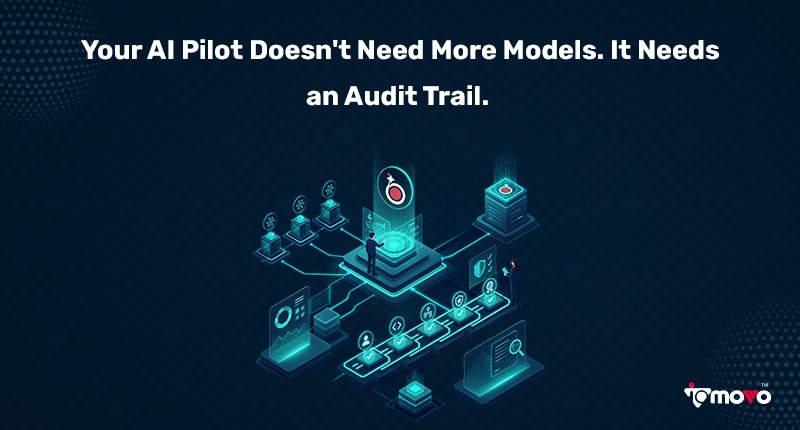
The gap isn't vision, roadmaps, or change management expertise. The gap is infrastructure. Data pipelines that can handle production loads. Metadata management that enables discoverability. Permission frameworks that satisfy compliance requirements. Audit trails that prove governance.
87% of data science projects never reach production due to integration complexity. BCG research also shows that 70% of AI failures stem from people and process issues, not algorithms. The consulting industry is facing a reckoning. The old model worked for cloud migrations and digital transformations. But it fails for AI.
Consulting Firms Excel at Strategy, Not Infrastructure
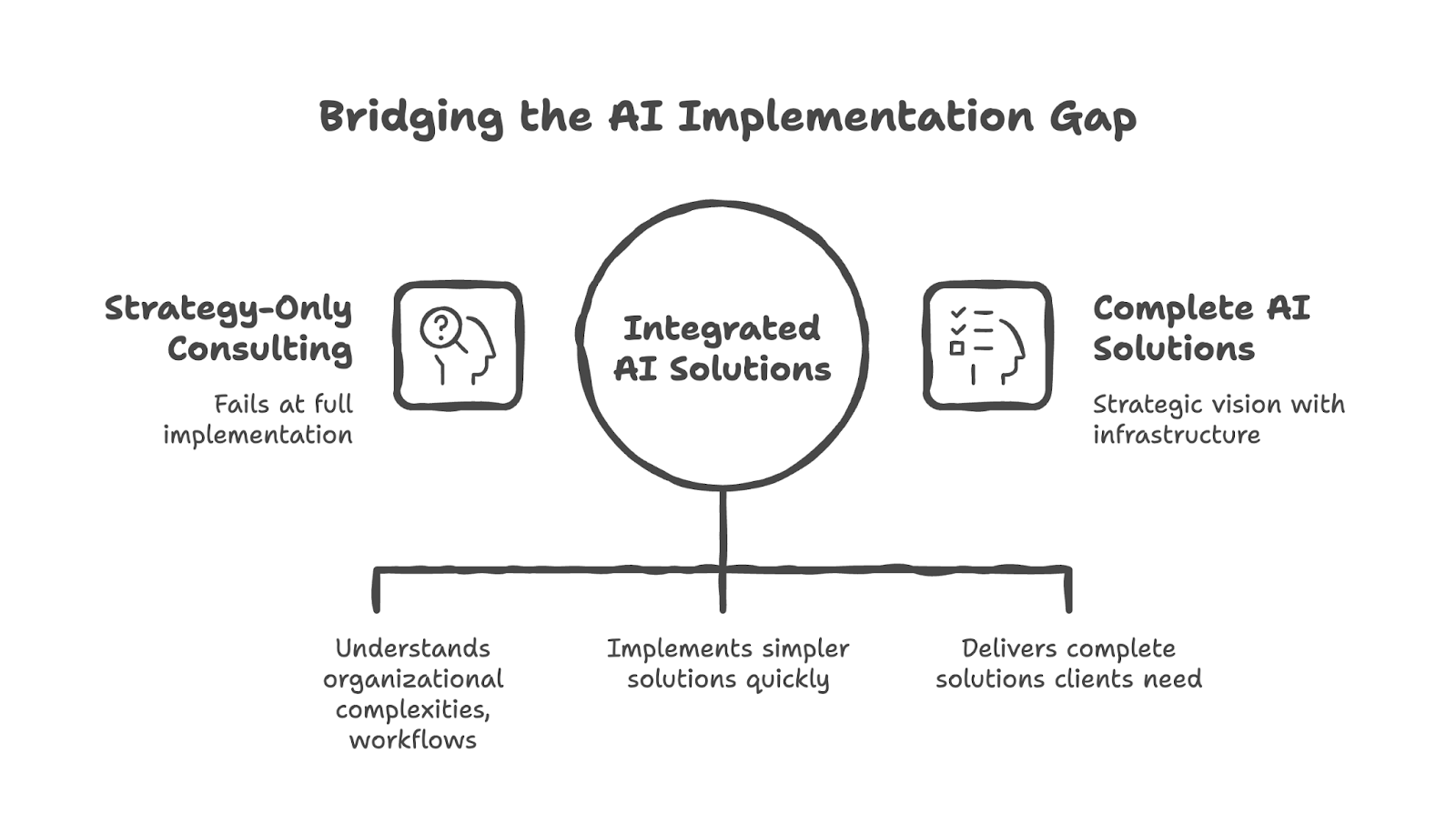
Consulting firms are world-class at vision, roadmaps, and change management. AI demands something different. Production-grade data infrastructure. The handoff problem defines the current consulting model. Firms excel at strategy and pilot development. They often disappear when full implementation begins. Executives at Merck and Bristol-Myers Squibb publicly stated consulting partners are "learning on the client's dime."
Companies like Merck, Bristol-Myers Squibb, and CVS Health found their internal teams better positioned to execute AI initiatives. Internal teams understand organizational complexities and workflows that consultants spend months discovering.
Big consulting firms apply change management frameworks designed for previous technology rollouts. These frameworks produced 70% failure rates even before AI entered the picture. Applying yesterday's playbook to AI creates predictable outcomes.
A mid-size retailer working with Accenture received an 8-month deployment recommendation for their deep learning solution. A specialized AI consultancy implemented a simpler solution using existing tools in six weeks. The same pattern repeats across industries.
The system integrator market tells the story. Market projections show growth from $553 billion in 2025 to $764 billion by 2030, representing a 6.7% compound annual growth rate. System integrators are capturing $43 billion in services by 2029 because they deliver what clients need: complete solutions.
Enterprise B2B solutions that combine strategic vision with infrastructure delivery are replacing strategy-only engagements.
Why AI Fails Without Pipelines
Strategy doesn't fail, but infrastructure does.
Without production-grade data pipelines, metadata management, permissions frameworks, and audit trails, AI never escapes the pilot phase. Four infrastructure components determine success or failure.
Data Pipelines
Data teams spend 44% of their time building and maintaining pipelines at an average cost of $520,000 per year. Organizations must handle structured, semi-structured, and unstructured data. Gartner estimates 70% to 90% of organizational data is unstructured.
Integration complexity kills projects. 87% of data science projects never reach production because AI systems can't connect to existing systems. What looks like a simple API connection becomes a multi-million dollar systems integration project.
Metadata Management
Organizations need a unified metadata layer across all datasets and pipelines. Metadata-driven workflows are essential for discoverability and compliance. Custom metadata tags must track data provenance and iteration details.
ioHub delivers this unified data layer, connecting 10+ storage platforms into a single source of truth for metadata. This eliminates the data silos that block AI implementations.
Permissions and Access Controls
Role-based access control is non-negotiable for enterprise AI. Data residency requirements demand jurisdiction-specific controls. Audit logs must track who accessed what data, when, and why.
Audit Trails and Compliance
Financial services require DORA compliance. Healthcare needs HIPAA-compliant data handling. The government requires data sovereignty and air-gapped deployment options. Organizations need tamper-evident ledgers for compliance tracking.
The data tells the story:
- 44% of organizations cite IT infrastructure as the top obstacle to AI adoption
- Only 48% of AI projects make it to production
- The data governance market is growing from $5.38 billion in 2025 to $18 billion by 2032 at an 18.9% compound annual growth rate
The New Model: Consulting × Infrastructure Partnerships
The winning model isn't consultants building infrastructure.
Also, the winning model isn't infrastructure vendors doing strategy.
But the winning model is structured partnerships where each does what they do best.
Consulting Firm Responsibilities:
- Strategic vision and AI roadmap
- Use case identification and prioritization
- Change management and adoption planning
- Executive alignment and governance frameworks
- Business process redesign
Infrastructure Partner Responsibilities:
- Production-grade data pipelines
- Metadata management and data cataloging
- Permission frameworks and access controls
- Audit trails and compliance tracking
- Hybrid and multi-cloud deployment architecture
- Integration with existing tools and workflows
This model works because consultants focus on high-margin strategy work, which they excel at. Infrastructure partners handle technical complexity. Clients get complete solutions, not just recommendations. Time to production drops from 8+ months to 6 weeks. Total cost of ownership decreases.
Real-world partnerships validate this approach:
Accenture partnered with Anthropic to train 30,000 employees on Claude. Accenture partnered with OpenAI in December 2025 to help enterprise clients bring agentic AI into core business functions. TCS expanded its partnership with Google Cloud to integrate Gemini Enterprise for agentic AI solutions. IBM acquired Hakkoda to enhance cloud data modernization and AI expertise.
System integrators are becoming enterprise AI architects. They orchestrate transformation rather than just implementing technology. Preview partners for Microsoft Sovereign Cloud include Accenture, IBM, Infosys, Capgemini, Dell, and NTT Data.
Workflow automation platforms like ioFlow enable these partnerships by providing drag-and-drop builders for approvals, routing, and notifications without code or IT setup requirements.
Enterprise Expectations: Compliance, Sovereignty, Hybrid
Enterprise and government AI programs have non-negotiable requirements. Infrastructure partners must deliver compliance-ready, sovereign-capable, hybrid-deployable solutions from day one.
Compliance Requirements
By 2026, half of the world's governments expect enterprises to adhere to AI laws and data privacy requirements. 85% of organizations already use AI services and must comply. Industry-specific compliance varies:
- HIPAA for healthcare
- DORA for financial services
- FedRAMP for government
- SOC 2, GDPR, and ISO 27001 across industries
Data Sovereignty
Data must remain within specific geographic boundaries throughout the AI lifecycle. The EU AI Act enforces data residency requirements. Countries are developing sovereign clouds. Germany launched its sovereign cloud initiative. France created Bleu, a joint venture between Orange and Capgemini, for the French public sector.
Cross-border data transfers face strict legal requirements. Some jurisdictions prohibit cross-border transfers entirely. Others require demonstrating legal necessity and maintaining local copies.
Hybrid Deployment Models
Enterprises need deployment flexibility:
- Public cloud for non-sensitive workloads
- Sovereign regions for regulated data
- On-premises and air-gapped options for government and defense
- Multi-cloud architecture to avoid vendor lock-in
71% of organizations deploy cloud-native architectures. Organizations leveraging cloud data pipelines see 3.7 times return on investment compared to traditional approaches.
Microsoft is expanding Sovereign Cloud to Australia, India, Japan, and the UK by the end of 2025. In 2026, expansion includes Canada, Germany, Italy, Malaysia, Poland, South Africa, Spain, Sweden, Switzerland, the UAE, and the US. Data Guardian ensures only EU-resident personnel control remote access to European systems.
SAP and Cohere announced the EU AI Cloud in November 2025 for European enterprises. The offering addresses data sovereignty and regulatory alignment with model deployment within strict EU boundaries.
ioCloud provides hybrid and sovereign deployment options that meet these enterprise requirements. Government solutions address the specific needs of public sector AI programs requiring data sovereignty and air-gapped deployment.
ioMoVo as the Intelligence Layer Partner
System integrators and consulting firms need infrastructure partners who understand both AI and enterprise requirements. ioMoVo delivers the intelligence layer that makes AI initiatives production-ready.
Unified Data Layer
ioHub connects Google Drive, SharePoint, Dropbox, AWS, Azure, and on-premises servers into a single platform. This creates a single source of truth for metadata across all datasets. AI can access complete datasets required for training and inference without data silos blocking implementation.
AI-Powered Intelligence
ioAI provides natural language search across all enterprise content. Auto-tagging, transcription, summarization, and sentiment detection happen automatically. The platform generates intelligence without exposing data to third-party LLMs. AI is embedded directly into workflows rather than bolted on afterward.
Workflow Automation
ioFlow offers a drag-and-drop workflow builder for approvals, routing, and notifications. Automation works by file type, content, team, or status. Integration spans ioMoVo modules and external storage platforms. No code or IT setup is required.
Secure Client Delivery
ioPortal creates branded portals for stakeholder collaboration. Watermarking, expiry dates, and access-level controls protect sensitive content. Approvals and feedback collection happen directly in the portal. The platform replaces file link chaos with structured trackability.
Deployment Flexibility
Cloud, hybrid, or on-premises deployment options support any enterprise architecture. Sovereign regions satisfy data residency requirements. Air-gapped environments serve government and defense needs. The platform works with existing IT infrastructure.
Compliance-Ready Architecture
SOC 2, GDPR, and HIPAA compliance come out of the box. Role-based access controls and audit trails satisfy regulatory requirements. Data processing stays within specified jurisdictions. Tamper-evident logging supports compliance tracking.
Consulting firms choose ioMoVo because it enables them to focus on strategy rather than infrastructure buildout. The platform delivers production-grade AI infrastructure in weeks instead of months. Integration with Adobe, Microsoft, and Avid embeds into client workflows. The architecture scales from pilot to enterprise without re-architecture.
Use cases span industries:
- Media organizations process petabytes locally and avoid egress fees
- Government agencies comply with data sovereignty while leveraging AI
- Financial services achieve DORA compliance with audit trails
- Healthcare processes data with HIPAA compliance and local inference
The Future of Consulting: From PowerPoint to Pipelines
The consulting firms that thrive in the AI era won't be the ones with the best slide decks. But they'll definitely be the ones with the best infrastructure partners.
Clients expect end-to-end solutions, not just recommendations. Learning on the client's dime is no longer acceptable. Partnerships are becoming competitive differentiators.
Analysts foresee a second wave in four to five years once AI use cases mature and best practices are established. Consultants may see a resurgence in helping industrialize systems securely. But the first wave belongs to firms that can deliver infrastructure now.
The partnership ecosystem is growing. Microsoft launched its Digital Sovereignty specialization. Preview partners include Accenture, IBM, Infosys, Capgemini, Dell, NTT Data, Orange, and Telefónica. System integrators are capturing $43 billion in services by 2029.
What separates winners from losers?
Winners build strategic partnerships with infrastructure platforms. Losers try to build everything in-house or stay strategy-only. The market reality is clear: enterprises want fewer vendors and complete solutions.
The Infrastructure Imperative
95% of AI pilots fail not because the strategy is wrong but because infrastructure simply isn't there yet.
Consulting firms excel at vision. They struggle with production-grade data pipelines, metadata management, permissions frameworks, and audit trails. The winning model combines consulting expertise with infrastructure partnerships where each does what they do best.
Enterprise requirements are non-negotiable. Compliance, sovereignty, and hybrid deployment must be built in from day one. System integrators need partners who deliver intelligence layers, not just storage.
Become an ioMoVo Partner
Integrators can embed ioMoVo in enterprise and government AI programs. Deliver the infrastructure layer your strategy depends on.
The question isn't whether AI will transform enterprises. The question is whether your consulting practice will have the infrastructure partners to deliver on the promise. Or whether clients will find firms that do.
Fill Out the Form Below to Get Started!
Transform How Your Organization Manages Content
Unlock hidden value in your content with AI — faster discovery, better workflows, and organized collaboration
Ready to see how ioMoVo can fit your team?
-The-Future-of-DAM.jpg)

.jpg)