.svg)
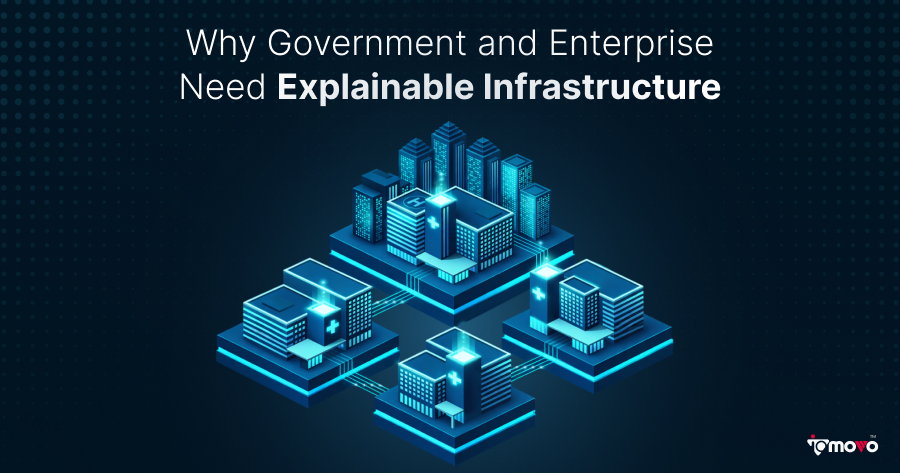
Building AI You Can Audit: Why Government and Enterprise Need Explainable Infrastructure

Government and regulated enterprises are deploying AI at a record pace. Gartner predicts government organizations will outspend all other industries on AI by the end of 2025. But most of these systems can't be audited.
The stakes are clear:
- EU AI Act carries fines up to €35 million for non-compliant systems
- Federal agencies reported over 1,990 AI use cases as of January 2025
- Regulatory fines for data mishandling exceeded $4 billion globally in the past five years
The question isn't whether the government will use AI. The question is whether they can deploy it to satisfy auditors, regulators, and public trust.
The Need for Trust and Regulatory Alignment
AI in government and regulated sectors operates under different rules. Trust and regulatory alignment are mandatory.
Federal requirements are extensive. OMB M-25-21 directs agencies to deploy AI that is safe, secure, and resilient. The GAO identified 94 government-wide AI requirements, including publicly released AI strategies and maintained use case inventories.
The EU AI Act requires high-risk systems to meet strict standards for risk management, data governance, transparency, and human oversight. Providers must register systems and obtain CE certification. Fines range from €7.5 million to €35 million.
Sector-specific requirements add layers. FedRAMP for federal systems. HIPAA for healthcare. BCBS 239, FINRA, and SOX for financial services.
Transparency requirements are explicit. Stakeholders must understand how AI systems operate. Providers must disclose data sources, logic, and decision-making processes. Users must be able to challenge outputs.
Government AI programs require infrastructure built for these compliance demands.
The Black Box Problem: Why Unexplainable AI Fails
Black box AI creates three types of risk: compliance, liability, and trust. All three are unacceptable in government and regulated environments.
Compliance risk hits first. Organizations cannot demonstrate regulatory adherence when decision-making processes can't be traced. Regulators require explanations for AI decisions. Missing audit trails create automatic compliance failures.
Liability risk creates legal exposure. Organizations cannot defend AI decisions without documentation. FOIA requests require explanations. Discrimination claims require proof of fairness. Medical malpractice cases need traceable decision paths.
Trust risk undermines adoption. Citizens won't trust unexplainable government decisions. Patients won't accept questionable medical AI. Financial customers demand transparency. The cost is measurable. Poor data quality costs $12.9 million annually. Regulatory fines exceeded $4 billion globally in the past five years.
Black box means no data lineage tracking, no audit logs, no metadata management, no transformation tracking, no version control, no explainability layer.
Explainable Infrastructure Components
Explainable AI is infrastructure.
Four components make AI auditable.
Data Lineage Tracking
Complete visibility into the data's journey from source to AI decision is foundational. Lineage tracks origins, transformations, and destinations. It maps dependencies and provides point-in-time views.
The EU AI Act mandates documentation of data origins and quality metrics. FOIA requests require tracing government data use.
Requirements include automated metadata collection, column-level lineage, real-time updates, visual diagrams, and API access.
ioHub delivers this unified metadata layer, connecting 10+ platforms.
Audit Logs and Trails
Timestamped records create accountability. Logs capture who accessed what data, when, why, and what they did. They track model versions, training data, and parameters.
The government requires audit trails. Healthcare needs HIPAA logging. Financial services need SOX compliance. Logs must be tamper-evident.
Requirements include immutable storage, millisecond timestamps, user identity capture, and retention policies.
ioFlow and ioReport provide comprehensive logging with automated reporting.
Metadata Management
Centralized repositories make lineage understandable. They connect technical metadata to business context, enabling discovery and linking quality metrics to requirements.
Requirements include active management, business glossaries, quality scores, and policy enforcement.
Governance Controls
Role-based access controls enforce policy. This includes approval workflows, human oversight, and alerting.
NIST AI RMF requires human oversight. Government AI needs 95% accuracy with human review. Organizations need kill switches.
Requirements include SSO integration, encryption keys, workflow engines, and real-time monitoring.
Use Cases: Government, Media, Legal, Healthcare
Explainable AI isn't theoretical, and four sectors require it today.
Government
FedRAMP mandates audit trails. NIST AI RMF requires explainability. OMB M-25-21 mandates transparency reporting. Minimum 95% accuracy with human oversight applies.
Applications requiring complete audit trails:
- Benefits adjudication (Social Security, veterans benefits, unemployment)
- Immigration decisions (visa approvals, asylum determinations)
- Regulatory enforcement (EPA, FDA, OSHA compliance)
- Grant allocation (research funding, business grants)
Federal agencies often need air-gapped environments with self-hosted deployments and full audit capabilities.
Media & Broadcast
Content rights management demands lineage. Organizations track usage licenses, transformations, and expiration. Compliance includes FCC requirements, copyright adherence, and source attribution.
Legal
eDiscovery requires audit trails of document access. Chain of custody for digital evidence. Document version lineage. Attorney-client privilege tracking. Court authentication. Record keeping for malpractice insurance.
Healthcare
HIPAA requires logging every Protected Health Information access. Audit trails show who viewed records, when, and why. Clinical AI needs FDA compliance, validation tracking, and model version control.
Financial organizations face similarly stringent requirements.
ioMoVo's Lineage Tracking and Governance Layer
ioMoVo provides the infrastructure layer that makes AI auditable. Built-in lineage, logging, and governance turn black box AI into explainable AI.
Automated Data Lineage
ioHub connects Google Drive, SharePoint, Dropbox, AWS, Azure, and on-premises servers. It automatically tracks data movement, creates visual lineage maps, and provides compliance snapshots.
Features include column-level lineage, real-time updates, API access, and catalog integration.
Comprehensive Audit Trails
ioReport logs every file access, modification, and delivery. It timestamps actions with user identity, tracks workflows, and generates compliance reports automatically.
Features include immutable logs, configurable retention, investigation tools, and export formats.
Governance Controls
ioPortal provides role-based access controls, watermarking, approval workflows, and SSO integration. Compliance certifications include SOC 2, GDPR, and HIPAA. Designed for air-gapped and sovereign deployments.
AI-Powered Intelligence with Transparency
ioAI provides natural language search with explainable results. Auto-tagging, transcription, and summarization with source attribution. All operations logged.
The differentiator: ioAI generates intelligence without exposing data to third-party LLMs. Processing happens within customer environments. Audit trails show exactly what AI did and why.
Deployment Flexibility
ioMoVo offers deployment options for every compliance requirement:
- Cloud deployment for standard use cases
- Hybrid deployment for mixed sensitivity levels
- On-premises deployment for complete control
- Air-gapped deployment for federal and defense requirements
- Sovereign deployment for data residency requirements
Decision-makers choose ioMoVo because compliance is built in. Lineage and audit trails are native. Works with existing infrastructure. Scales from department to enterprise. Embeds into Adobe, Microsoft, and Avid.
The Future: Certified AI Pipelines Become Standard
The regulatory direction is clear. Within 2 to 3 years, certified AI pipelines with built-in auditability will be the baseline for government and regulated enterprise AI.
Regulatory momentum is building. The EU AI Act requires CE marking for high-risk AI. Federal conformity assessments are expanding. Industry-specific certifications are emerging. Third-party audits are becoming standard.
Technical standardization is accelerating. NIST AI Risk Management Framework adoption is widespread. ISO standards for AI governance are being developed. Common metadata and audit log formats are emerging.
Market expectations are shifting. Insurance companies require AI governance for coverage. Investors demand risk management in due diligence. Procurement requirements include explainability clauses.
Decision-makers can prepare now:
- Assess current systems for explainability gaps
- Implement lineage tracking before mandates
- Establish governance frameworks today
- Choose infrastructure partners with built-in compliance
- Build audit readiness into procurement requirements
Building Trust Through Transparency
AI won't scale in government and regulated sectors without auditability.
Black box AI creates compliance risk with €35 million fines. It creates liability risk through legal exposure. It creates a trust risk that undermines public accountability.
Explainable infrastructure has four components. Data lineage tracking. Audit logs and trails. Metadata management. Governance controls.
Real-world use cases in government, media, legal, and healthcare demand these capabilities today. Federal agencies need audit trails for FOIA compliance. Media organizations need rights tracking for copyright compliance. Legal firms need a chain of custody for evidence. Healthcare providers need HIPAA logging for every patient record access.
ioMoVo provides the infrastructure layer that makes AI auditable. Built-in lineage automatically tracks data across 10+ platforms. Comprehensive logging captures every action with immutable records. Governance controls enforce policies with role-based access and approval workflows. AI-powered intelligence operates within customer environments without third-party data exposure.
The future belongs to certified AI pipelines. Organizations deploying them now will lead. Organizations waiting will face compliance gaps, regulatory action, and lost trust.
See explainability, lineage, and compliance in action. Discover how ioMoVo turns black box AI into auditable infrastructure.
The organizations that deploy AI successfully in government and regulated sectors won't be the ones with the most sophisticated algorithms. They'll be the ones who can explain every decision, trace every data point, and prove compliance at audit time.
املأ النموذج أدناه للبدء!
Transform How Your Organization Manages Content
Unlock hidden value in your content with AI — faster discovery, better workflows, and organized collaboration
Ready to see how ioMoVo can fit your team?
.jpg)

-v2%202.jpg)
.jpg)
.jpg)